In the past, Uniswap was mainly used to swap crypto assets such as ETH and USDC. Anyone could create a trading pool, provide liquidity, and trade.
But real-world assets (RWAs) such as real estate funds, tokenized treasuries, and stocks are different. These assets are usually subject to regulation: investors need to complete KYC and meet the relevant investment eligibility requirements, so they cannot be traded as openly as ordinary cryptocurrencies.
To solve this problem, in July 2026 Uniswap launched Permissioned Pools, allowing regulated assets to plug into Uniswap v4's AMM trading system.
Uniswap is attempting to bring traditional financial assets into onchain trading markets.
1 | What Are Permissioned Pools?
Permissioned Pools are, in essence, a system of onchain permission management added to Uniswap trading pools.
In an ordinary Uniswap pool, any wallet can trade;
a Permissioned Pool first requires passing identity and eligibility review - only authorized wallets can participate.
It is built on Uniswap v4's Hook mechanism and mainly includes three functions:
-
Trade validation: when a user swaps assets, the pool checks whether the wallet is on the authorized allowlist.
-
Liquidity validation: before an LP adds liquidity, it likewise has to pass the permission review.
-
Permission management: the asset issuer can manage the allowlist and control which wallets are allowed to trade.
Unlike traditional websites, which restrict users at the frontend, Permissioned Pools perform the permission check at the smart contract layer. Even if a user bypasses the frontend and calls the contract directly, they still must pass the corresponding permission validation.
This way, issuers can keep control over investor eligibility and asset transfers while still using the AMM trading mechanism.
2 | How Is It Implemented?
Permissioned Pools make use of Uniswap v4's Hook architecture.
A Hook can be understood as a plugin: developers can insert custom logic at different stages of a trading pool. Permissioned Pools use Hooks to run compliance checks during trades and liquidity operations.
There is another important design: Virtual Accounting.
An ordinary AMM directly manages the token balances inside the pool, but regulated assets often come with transfer restrictions and cannot move freely in and out of a pool like ordinary ERC-20 tokens.
Through virtual accounting, Permissioned Pools separate the AMM's trade math from the actual custody of the regulated asset. Uniswap v4 handles the trade calculations, while the asset stays in a permissioned contract system.
This way, the pool can use the AMM's trading mechanism while keeping the compliance restrictions that regulated assets require.
3 | Which Institutions Took Part in Building It?
Permissioned Pools was not developed by Uniswap alone; early partners include:
-
Superstate: took part in the standards design, focused mainly on tokenized stocks and funds.
-
Securitize: partnered with Uniswap to bring tokens issued under its DS Protocol into compliant onchain trading.
-
Dowgo: handled the ERC-3643 integration, bringing identity verification and transfer restrictions into the trading system.
ERC-3643 is a token standard for regulated assets; it can enforce identity verification, investor eligibility, and transfer restrictions at the token level.
These partners contributed to the build from the angles of asset issuance, compliance management, and technical integration respectively, providing the infrastructure for traditional financial assets to enter AMMs.
4 | GromaCoin: The First Real Application Case
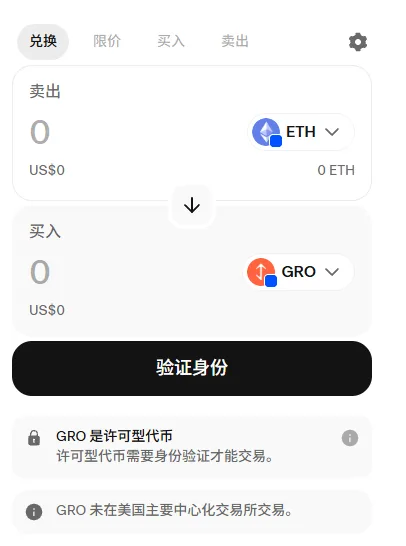
In November 2026, GromaCorp launched the real estate token GromaCoin (GRO), becoming the first asset to connect to Uniswap Permissioned Pools.
GRO is deployed on the Base network, uses the ERC-3643 standard, and represents the holder's interest in the Groma Real Estate Trust.
This real estate trust mainly invests in multifamily residential properties in the Boston and Providence areas of the United States.
According to public reporting, its key data is as follows:
| Metric | Data |
|---|---|
| Underlying asset scale | About $95 million |
| Number of properties | 125-150+ |
| GRO net asset value | $1.07 |
| Current dividend yield | About 3.74% |
| Blockchain | Base |
| Trading pool | GRO/USDC |
GRO established a permissioned trading pool on Uniswap v4, where only users who have completed identity verification and meet the investor eligibility requirements can trade.
Groma also partnered with Birch Hill and Morpho to let investors use GRO as collateral to borrow USDC, with an initial supply cap of $5 million.
GRO can not only trade onchain, but also enter the DeFi lending market from there.
From real estate assets to an investment trust, and then to tokenization, AMM trading and collateralized lending, a complete onchain finance pathway is taking shape.
5 | What Does This Mean for Uniswap and UNI?
The biggest significance of Permissioned Pools is that it expands Uniswap's trading scope from ordinary crypto assets to regulated traditional financial assets.
In the future, tokenized treasuries, stocks, real estate funds and the like all have a chance to enter the AMM market this way, bringing Uniswap more asset types, potential trading volume, and institutional partnership opportunities.
But for UNI holders there is a more practical question: can these new trades convert into value capture for UNI?
I specifically tracked the GromaCoin GRO/USDC trading pool and verified it through actual trade logs and onchain StateView queries.
What I ultimately found is that, at present, this pool's LP Fee is 0, its Hook Swap Fee is also 0, and its Protocol Fee is likewise 0.
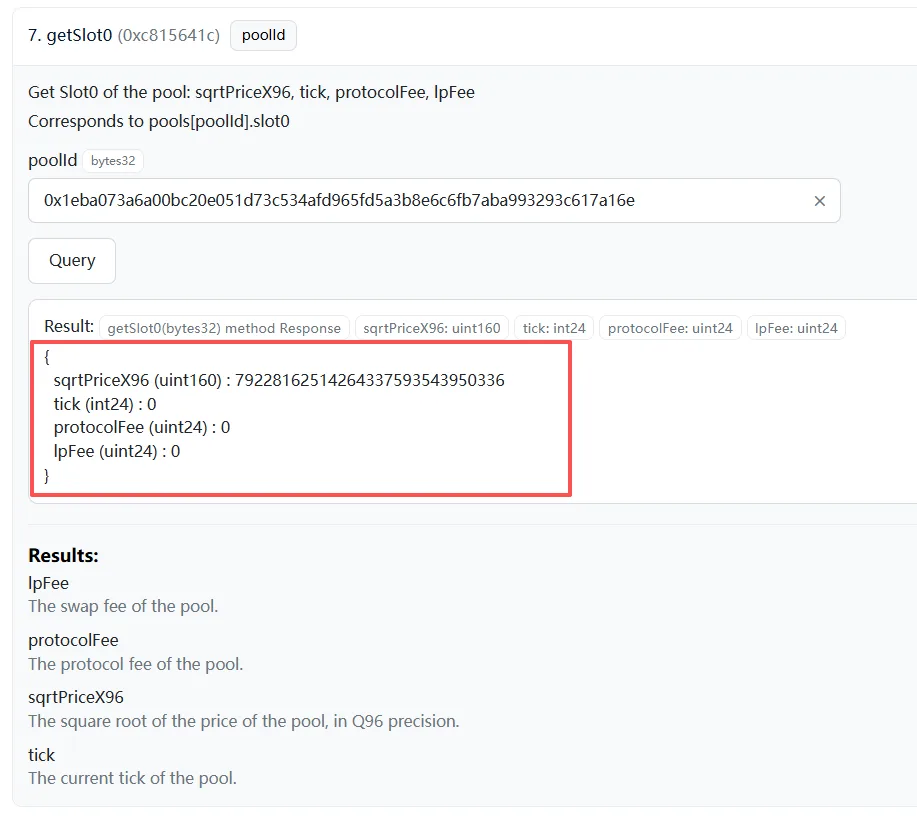
That means at least under the current onchain configuration, GRO/USDC trading generates no protocol fee income for UNI and contributes nothing to UNI burn.
The expansion of the Uniswap ecosystem does not mean UNI is necessarily going to benefit in step.
What really matters is still whether these new business lines can convert into protocol revenue, and ultimately transmit through to UNI's value capture mechanism.